
Insights · August 18, 2026
Blown-in attic insulation is the cost-effective upgrade
Loose-fill fills what batts miss. On a settled attic it is the fastest payback in the house — often a few years, not a remodel.
What it is
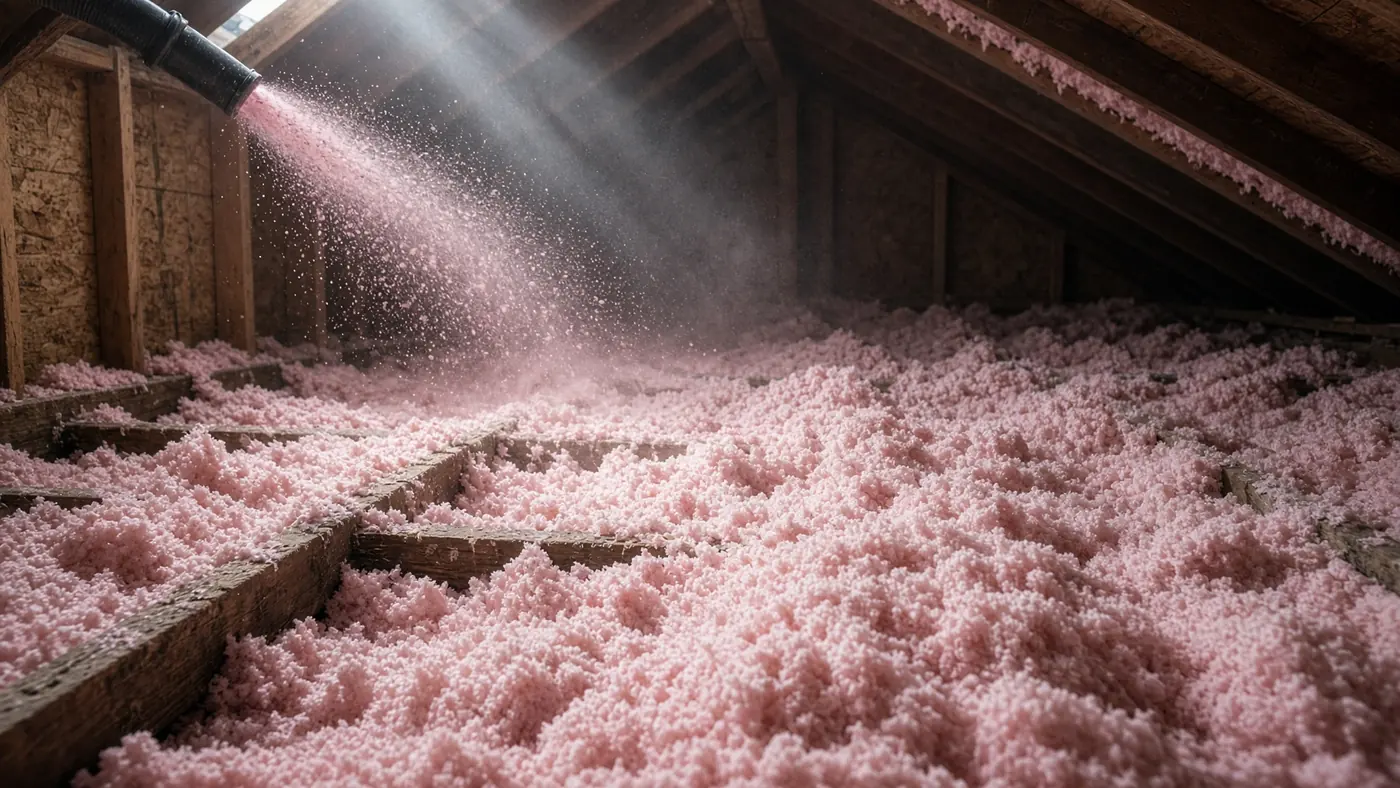
Blown-in, or loose-fill, is fiberglass or fire-treated cellulose. A machine puts it in the attic so it fills corners and irregular bays a batt leaves empty.
A weak attic can let a large share of the heat you paid for leave through the top — often talked about as 20–25% of the home’s heat, and on the houses we open it is the main leak. The blow puts a continuous layer on the ceiling plane. Conditioned air stays in the rooms. The equipment rests.
Why it wins
The reasons are practical.
- Bills. A real attic upgrade can cut heating and cooling costs on the order of 35–40% when the old layer was the problem. We have seen first-year drops around 38% on jobs like that.
- A day. A crew is usually in and out the same day. Four to eight hours is typical. The living space stays yours.
- Cellulose is up to about 85% recycled paper, and it handles sound, pests, and a bit of humidity better than a fluffy glass fill.
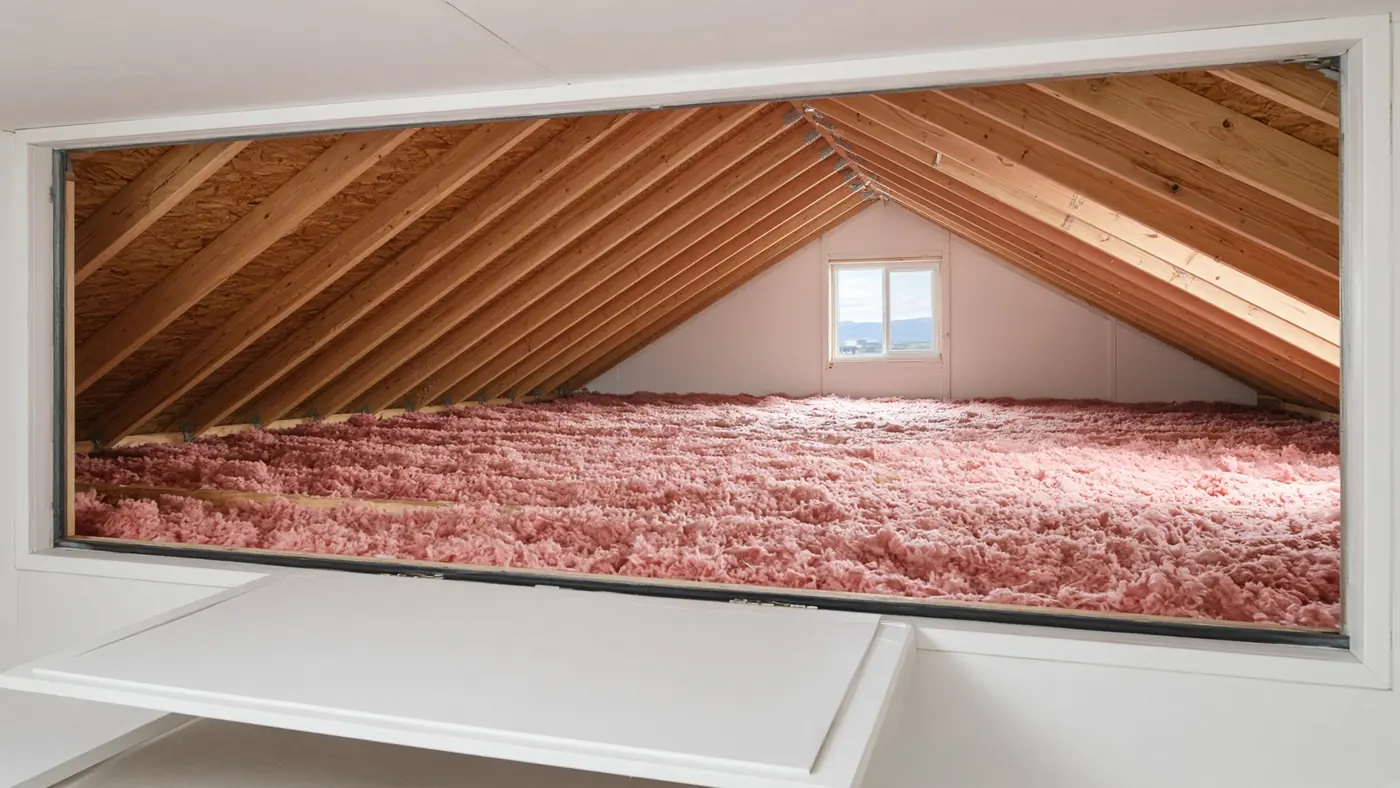
- Installed to depth and kept dry, it holds R-value. It does not sag off a wall the way a tired batt does. Attics still settle — which is why the installed depth has to start high enough.
Payback
This is one of the faster returns in a house. Many owners are back to even in a few years on energy alone. Rebates and credits, when you qualify, cut the front of the job. Attic insulation also shows up near the top of home-improvement payback lists, sometimes over 100% of the cost when you count the resale bump.
Spray foam costs more and belongs in assemblies with no attic. Batts take labor to fit perfectly and still miss the odd bay. Blown-in is the balance.
Fiberglass or cellulose
Blown fiberglass is light, resists fire, and runs about R-2.2 to R-2.7 per inch. It suits a big open attic. Cellulose is denser, about R-3.2 to R-3.8 per inch, fills tighter, and quiets the ceiling. A lot of retrofits pick cellulose. Fiberglass is still the right call in plenty of Front Range attics, including the builder-grade blend we blow.
Aim for R-38 at the low end and R-49 to R-60 here. Climate zone decides the number. We do not leave it at the code minimum if the hatch says the house needs more.
How a job goes
Seal the attic leaks. Set baffles so the soffits still breathe. Blow to a marked depth. That is the day.
You can rent a machine. Pros are who get the depth even, keep the ventilation, and keep you eligible for a rebate that asks for proof.
Five years on
A typical before-and-after we hear: an attic sitting near R-20, lumpy, then a cellulose blow. Comfort the first week. Bills down close to 40%. The seasons stop rearranging which room you sit in.
Before you start, know the leaks, deal with pests or a wet deck, and get the inspection. If you want one upgrade that pays you back without opening walls, this is the one.