

Services · Front Range
Blown-in insulation
Attics and closed walls
Loose-fill is the product that covers an attic. A machine puts it where a batt will not go: the edges, the corners, the bays around the wiring. On the Front Range the target is thick enough to still be R-49 to R-60 after it settles.
Where it belongs
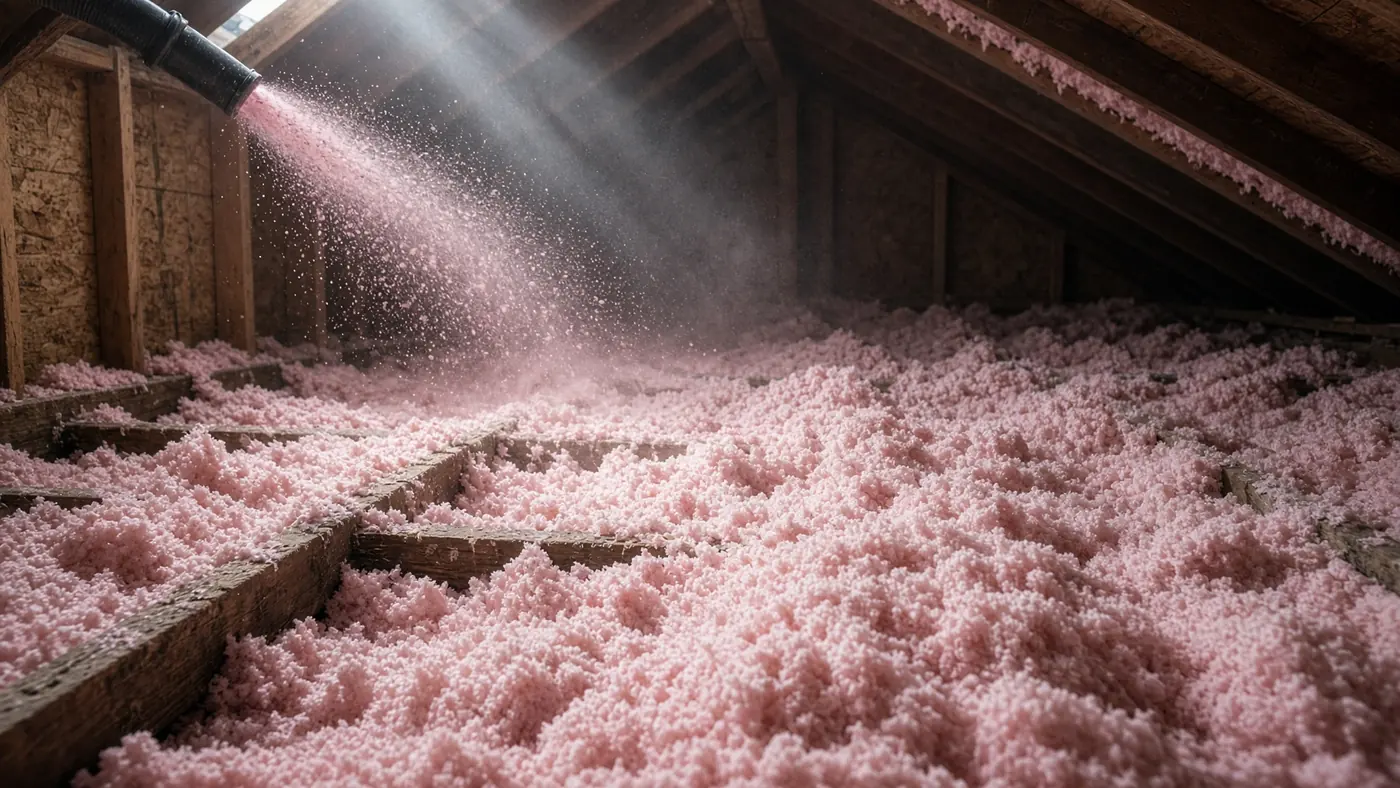
A vented attic gets a blanket on the ceiling plane. We air-seal the big holes first, set the baffles so the soffits still breathe, then blow until the joists disappear. If you can still see lumber when we leave, the job is not done.
Closed walls are the other use. Dense-pack cellulose or fiberglass fills the cavity from small holes. The drywall stays. It is not a substitute for opening a wall that is already gutted.
Fiberglass or cellulose
Blown fiberglass is the builder-grade blend we use on most open attics. It is light and it holds when it is installed dry and deep. Cellulose is denser, fills tighter, and is the usual pick when the bays are irregular or the ceiling needs quieting.
Both settle. That is why a new attic starts high. A skim coat on a twenty-year-old layer does not get the house to R-60.
- Attic target here is R-49 to R-60, often 16 inches or more once it has settled.
- Most attic blows are one day. The rooms stay yours.
- If the R-value we measure is too low, instant rebates are often available. We say so after the hatch, not before.
Where we will not blow it
Rim joists, crawl walls, and cathedral ceilings are not a loose-fill job. The material falls out or has no cavity to sit in. Those assemblies get foam or board. If the attic is already full and the bill is still ugly, we look somewhere else.